Beyond Self-Care: Supporting the People Behind the Mission
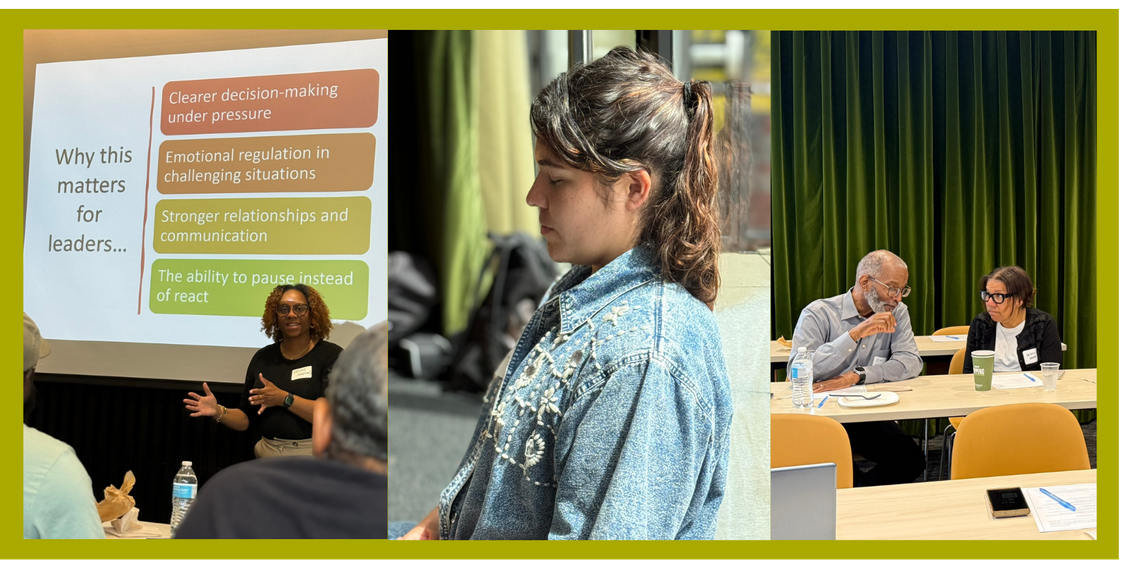
Left: Dr. Devin Moran explains how burnout can impact an organization; Center: Participant Laura Sevilla takes a mindful moment; Right: Participants Rodney Brown and Valerie Waller chat about leadership wellness.
The people behind nonprofit missions have always carried immense responsibility. Whether you're leading an organization, managing programs, coordinating volunteers, raising funds, or supporting operations, today's nonprofit workforce is navigating increased demand for services, funding uncertainty, staffing challenges, and growing administrative burdens. It's no surprise that burnout continues to rise across the sector.
The Center for Effective Philanthropy's State of Nonprofits 2026found that nearly half (46%) of nonprofit CEOs say their own burnout is "very much" a concern—up significantly from just under 30% the previous year. At the same time, one in four nonprofit leaders report that burnout is significantly affecting their staff, underscoring that burnout isn't simply an individual challenge—it affects entire organizations.
Earlier this month, CVNC's June Quarterly Workshop brought nonprofit professionals together for a conversation on wellness and sustainable leadership. Led by Dr. Devin Moran, founder of The Joy Praxis, the session, From Burnout to Balance: Sustainable Self-Care for Nonprofit Leaders, explored practical strategies for supporting both individual well-being and organizational health. An educator, writer, and leadership coach, Dr. Moran helps leaders and organizations move beyond performative wellness efforts to build sustainable practices that strengthen both people and organizations.
One of the workshop's most important messages challenged a common misconception: self-care isn't simply an individual responsibility—it is also an organizational responsibility. While each of us has practices that help us stay grounded, executive leaders play an important role in shaping the culture, expectations, and systems that allow people to work sustainably.
Recognizing the Signs
Burnout doesn't happen overnight. During the workshop, participants explored the difference between stress and burnout.
Stress is often temporary and tied to specific deadlines or events. Burnout, however, is chronic. It is characterized by ongoing exhaustion, disengagement, impaired judgment, and reactivity. Common nonprofit drivers include persistent urgency, understaffing, and values misalignment.
These symptoms don't just affect individuals—they influence communication, relationships, decision-making, and organizational culture.
Moving from Burnout to Sustainable Practice
Rather than prescribing one-size-fits-all wellness practices, Dr. Moran encouraged participants to think about sustainable habits at both the individual and organizational levels.
Participants reflected on identifying personal energy drainers and restorers, establishing healthy boundaries, building accountability through peer support, replacing a culture of urgency with intentional planning, and modeling care as a leadership practice.
The workshop concluded with a reminder that sustainable organizations require sustainable people. That means aligning work with real capacity, building rhythms of recovery, sharing responsibility, and balancing impact with well-being.
Supporting People. Strengthening Organizations.
Burnout doesn't have a single solution. It requires both personal practices that help individuals care for themselves and organizational practices that create healthier, more sustainable ways of working.
Whether you're an executive director, program staff member, volunteer coordinator, board member, or somewhere in between, each of us has a role to play. Individuals can build habits that support their own well-being, while organizational leaders have an opportunity—and a responsibility—to cultivate cultures, expectations, and systems that make sustainable work possible.
At CVNC, we believe stronger organizations are built by investing in both people and organizational capacity. Through peer learning, technical assistance, and capacity-building support, we help nonprofits strengthen the systems that allow missions—and the people behind them—to thrive.
If your organization is interested in strengthening its capacity, we'd love to connect. And if you'd like to continue the conversation around sustainable leadership and workplace well-being, we're also happy to connect you with Dr. Devin Moran and The Joy Praxis.